
Description
Acts shows the Gospel moving outward and communities of disciples being formed throughout the Roman world. Paul’s letters help those communities understand what the death and resurrection of the Messiah mean and how that truth should reshape the way they live.
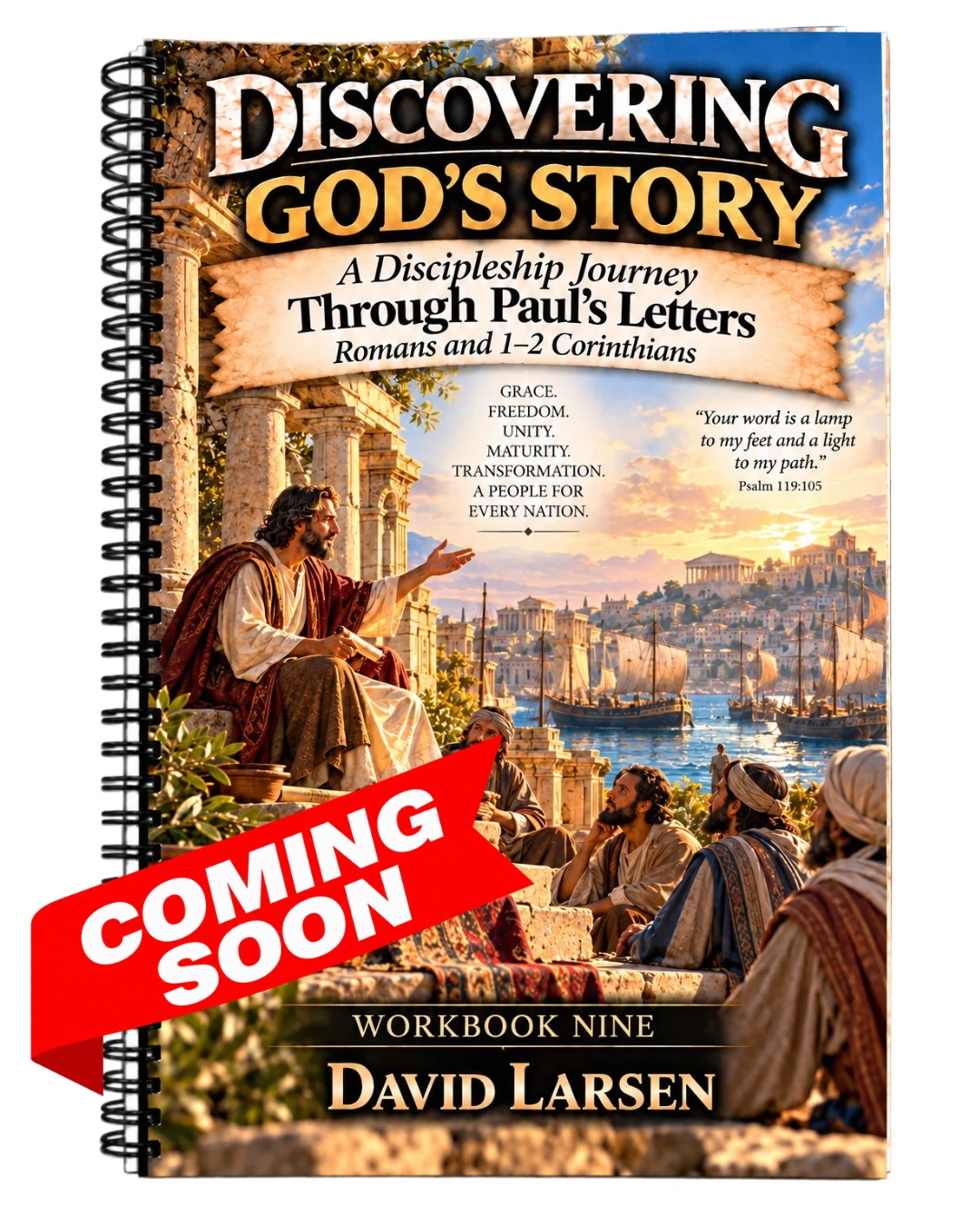
A Discipleship Journey Through Paul’s Letters — Romans and 1–2 Corinthians explores three of Paul’s most important letters within the larger biblical story, helping readers understand his teaching in connection with the Torah, Israel, the prophets, the Messiah, and the formation of the New Covenant people.
Romans provides one of Paul’s fullest explanations of the Gospel. He begins with the universal problem of sin and the inability of human beings to establish righteousness on their own. Both Jew and Gentile stand in need of the mercy of Elohim, and the good news centers upon what Yahweh has accomplished through the faithfulness, death, and resurrection of Yahshua the Messiah.
Paul reaches back repeatedly into the story already established in Scripture. Abraham, covenant, Torah, Adam, Israel, promise, faith, righteousness, sacrifice, and the prophets all become essential to understanding what the Gospel means. Paul is not presenting a new religion disconnected from Israel’s story. He is explaining how Yahweh’s covenant purpose is advancing through the Messiah.
Romans examines justification, reconciliation, freedom from the dominion of sin and death, baptism into Messiah, life in the Spirit, adoption, suffering, hope, and the coming redemption of creation. The believer is called not merely to agree with certain truths, but to enter a new kind of life shaped by union with the Messiah and the indwelling Spirit.
A major portion of Romans also wrestles with Israel, the nations, covenant faithfulness, and the promises of Yahweh. Paul asks how the inclusion of the Gentiles relates to Israel’s calling and whether the Word of Elohim has failed. His answer keeps the reader rooted in Yahweh’s faithfulness, mercy, covenant purpose, and continuing work within the larger story.
The letter then moves from explanation to transformation. The mercies of Elohim are meant to produce lives offered back to Him, renewed minds, humble service, genuine love, patience, holiness, unity, and faithfulness within the body of Messiah.
First Corinthians brings those truths into the complicated life of an actual congregation.
The Corinthian assembly possesses spiritual gifts and knowledge, yet struggles with division, pride, immorality, lawsuits, marriage questions, food offered to idols, misuse of freedom, disorder in worship, abuse surrounding the Lord’s Supper, competition over spiritual gifts, and confusion about resurrection.
Paul repeatedly brings the community back to the cross and the character of the Messiah. Wisdom is redefined through the crucified King. Freedom must be governed by love. Spiritual gifts are given for the good of the whole body. The Lord’s Supper must reflect genuine covenant fellowship. Worship must build up the assembly rather than promote individual importance.
Paul’s teaching on the body of Messiah becomes especially important. The ekklesia is not a collection of independent individuals who happen to share beliefs. It is one body with many members, each dependent upon the others and each called to contribute faithfully to the life of the whole.
At the center of that life stands love. First Corinthians 13 is not an isolated meditation on emotion. It appears within Paul’s correction of a divided and competitive congregation. Love is the way spiritual maturity becomes visible within community.
The letter then reaches one of its great climaxes in the resurrection. Paul insists that the resurrection of Yahshua guarantees the future resurrection of His people. The Gospel does not end with souls escaping the world. It points toward bodily resurrection, the defeat of death, and the fulfillment of Yahweh’s redemptive purpose.
Second Corinthians allows readers to see another side of Paul’s relationship with this community.
The letter is deeply personal. Paul speaks about suffering, weakness, comfort, reconciliation, ministry, generosity, integrity, spiritual authority, and the cost of serving the Messiah. His struggles expose the difference between worldly ideas of power and the pattern revealed through Yahshua.
Paul describes believers as carrying treasure in jars of clay so that the surpassing power may be recognized as belonging to Elohim rather than to human strength. Weakness, suffering, and endurance become places where the life of Messiah can be displayed.
Second Corinthians also develops the ministry of reconciliation. Those who have been reconciled to Elohim through Messiah are entrusted with the responsibility of representing that reconciliation to others. The Gospel therefore creates both a new identity and a new mission.
Across Romans and Corinthians, readers encounter some of Paul’s most important themes: sin and righteousness, faith and faithfulness, grace, covenant, Torah, Israel and the nations, justification, reconciliation, baptism, life in the Spirit, the body of Messiah, spiritual gifts, love, suffering, generosity, resurrection, and the coming renewal of creation.
The workbook invites readers to examine Paul within the biblical narrative rather than separating his letters from the Scriptures that shaped his thinking. His arguments continually reach backward into the Torah and Prophets, center upon the death and resurrection of Yahshua, and move forward toward the formation of faithful communities awaiting the completion of Yahweh’s Kingdom purpose.
By the end of these three letters, the Gospel has been explained not only as a message to believe but as a new reality in which disciples must learn to live together. The question now becomes how that same Gospel shapes freedom, identity, unity, maturity, perseverance, and hope across the other communities Paul addresses.
Romans and Corinthians reveal that the Gospel of the Messiah does more than forgive individuals, it creates a new covenant people who are called to live by the Spirit, love one another, embody the life of the Messiah, and await the resurrection and restoration still to come.
Reviews
There are no reviews yet.