
Description
Romans and Corinthians establish major foundations of the Gospel and show how the death and resurrection of the Messiah create a new covenant people. Paul’s remaining letters continue that work by showing how those people are to live in freedom, unity, maturity, faithfulness, and hope.
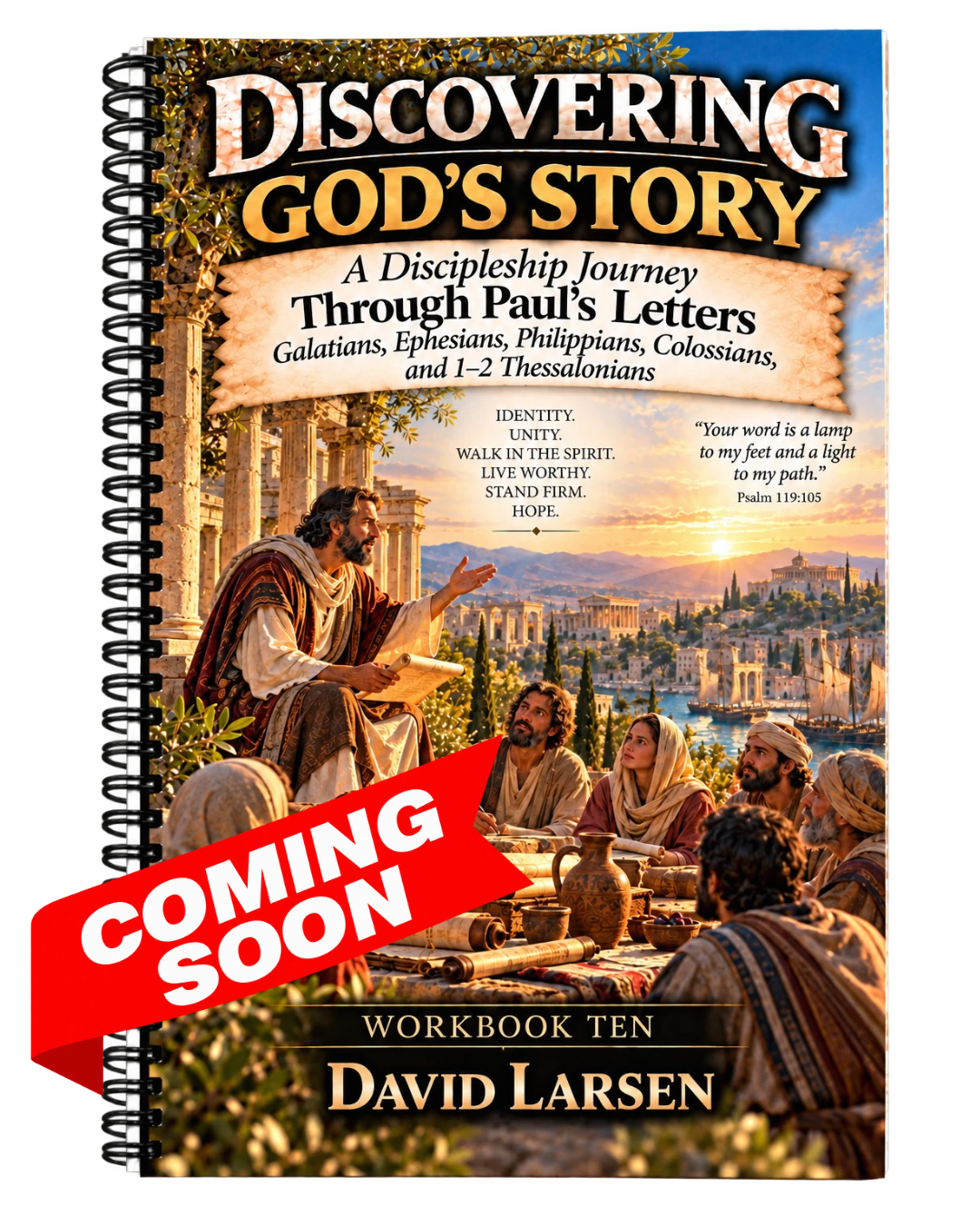
A Discipleship Journey Through Paul’s Letters — Galatians, Ephesians, Philippians, Colossians, and 1–2 Thessalonians follows Paul as he addresses communities facing questions about covenant identity, Torah, freedom, spiritual maturity, unity, suffering, false teaching, perseverance, and the return of the Messiah.
Galatians confronts one of the most important questions facing the early ekklesia: How do people from the nations become part of the covenant family of Abraham?
Paul strongly resists the claim that Gentile believers must become Jews through circumcision in order to belong fully to the people of Elohim. He reaches back to Abraham and the promise, showing that those who belong to Messiah are heirs according to that promise.
The issue is not whether Yahweh’s instruction is good, but whether covenant membership is established through ethnic boundary markers and human achievement or through faith in the Messiah and the gift of the Spirit.
Galatians therefore becomes a powerful call to covenant freedom. Freedom is not permission to live according to the flesh. It is freedom to walk by the Spirit, love one another, bear one another’s burdens, and produce the fruit that reflects the character of Yahweh.
Ephesians widens the perspective and reveals the larger purpose being accomplished through Messiah.
Paul describes the work of Yahweh as a plan to bring all things together in Messiah. Jews and Gentiles who were once divided are being formed into one new humanity, one household, one body, and one dwelling place for Elohim through the Spirit.
The dividing wall has been broken down, but unity does not mean uniformity. The body is equipped with different gifts and ministries so that every member can grow toward maturity and participate in building up the whole.
Ephesians therefore moves from identity to responsibility. Those who have been brought near must learn to walk worthy of their calling, with humility, patience, holiness, truthfulness, forgiveness, love, wisdom, and faithfulness in relationships.
The letter concludes by reminding disciples that their struggle is not merely human. They must stand firm in the armor of Elohim, grounded in truth, righteousness, faith, salvation, the Word, and prayer.
Philippians shows what that kind of faithfulness looks like under pressure.
Written from imprisonment, the letter is filled with joy, perseverance, humility, partnership, and confidence in the Messiah. Paul presents Yahshua Himself as the pattern of discipleship, the One who humbled Himself, took the form of a servant, became obedient unto death, and was then highly exalted.
The community is therefore called to share that same mindset. Disciples are to place the interests of others before their own, work out their salvation with reverence, shine as lights in the world, press toward the goal, and learn contentment whether they experience abundance or need.
Colossians centers everything upon the supremacy and sufficiency of the Messiah.
Yahshua is presented as the image of the invisible Elohim, the firstborn over creation, the One through whom all things were created, the head of the body, and the One through whom Yahweh is reconciling all things to Himself.
Because believers have died and been raised with Messiah, they are called to put off the old way of life and put on the new. Compassion, kindness, humility, patience, forgiveness, love, peace, gratitude, and wisdom become the visible clothing of the renewed community.
Paul also warns against teachings that appear spiritual but draw attention away from Messiah. Human philosophy, religious regulations, ascetic practices, and spiritual speculation cannot produce the transformation that comes from being rooted and built up in Him.
First and Second Thessalonians then turn the reader’s attention toward perseverance and the hope of the Messiah’s return.
The Thessalonian believers are a young community facing opposition, yet Paul celebrates their faith, love, and steadfast hope. He encourages them to live holy lives, love one another more deeply, work faithfully, remain watchful, and comfort one another with the promise of resurrection.
The return of Yahshua is not presented merely as a subject for prophetic speculation. It is a hope meant to shape how disciples live in the present.
Paul teaches that the dead in Messiah will be raised, the living will be gathered to Him, and the Day of Yahweh will bring both judgment and deliverance. Because that day is coming, believers are called to remain awake, sober, faithful, and steadfast.
Second Thessalonians addresses confusion surrounding that hope. Paul reassures the community, corrects misunderstandings, warns against deception, and calls disciples to endurance while they wait for the righteous judgment and appearing of the Messiah.
Across these six letters, Paul repeatedly returns to the same central reality: those who belong to Messiah have received a new identity that must become visible in a new way of life.
Freedom must produce love. Grace must produce faithfulness. Unity must lead to maturity. Spiritual truth must shape relationships. Hope must produce endurance. The expectation of the Messiah’s return must transform the way His people live now.
The workbook invites readers to trace Paul’s arguments back into the Torah, the promises to Abraham, Israel’s story, the prophets, and the teaching of Yahshua while also examining how those truths shape the everyday life of the ekklesia.
By the end of these letters, Paul has helped communities understand who they are in Messiah, how they are to walk by the Spirit, how they are to live together as one body, and how they are to remain faithful while awaiting the return of the King.
These letters reveal that life in Messiah is a continuing journey of freedom, transformation, unity, maturity, perseverance, and hope as Yahweh forms a people who are prepared to remain faithful until the King returns.
Reviews
There are no reviews yet.