
Description
Paul’s letters explain how the Gospel creates and shapes communities of disciples. The Apostolic Writings continue that formation by asking what kind of people those communities must become if they are going to remain faithful to the Messiah.
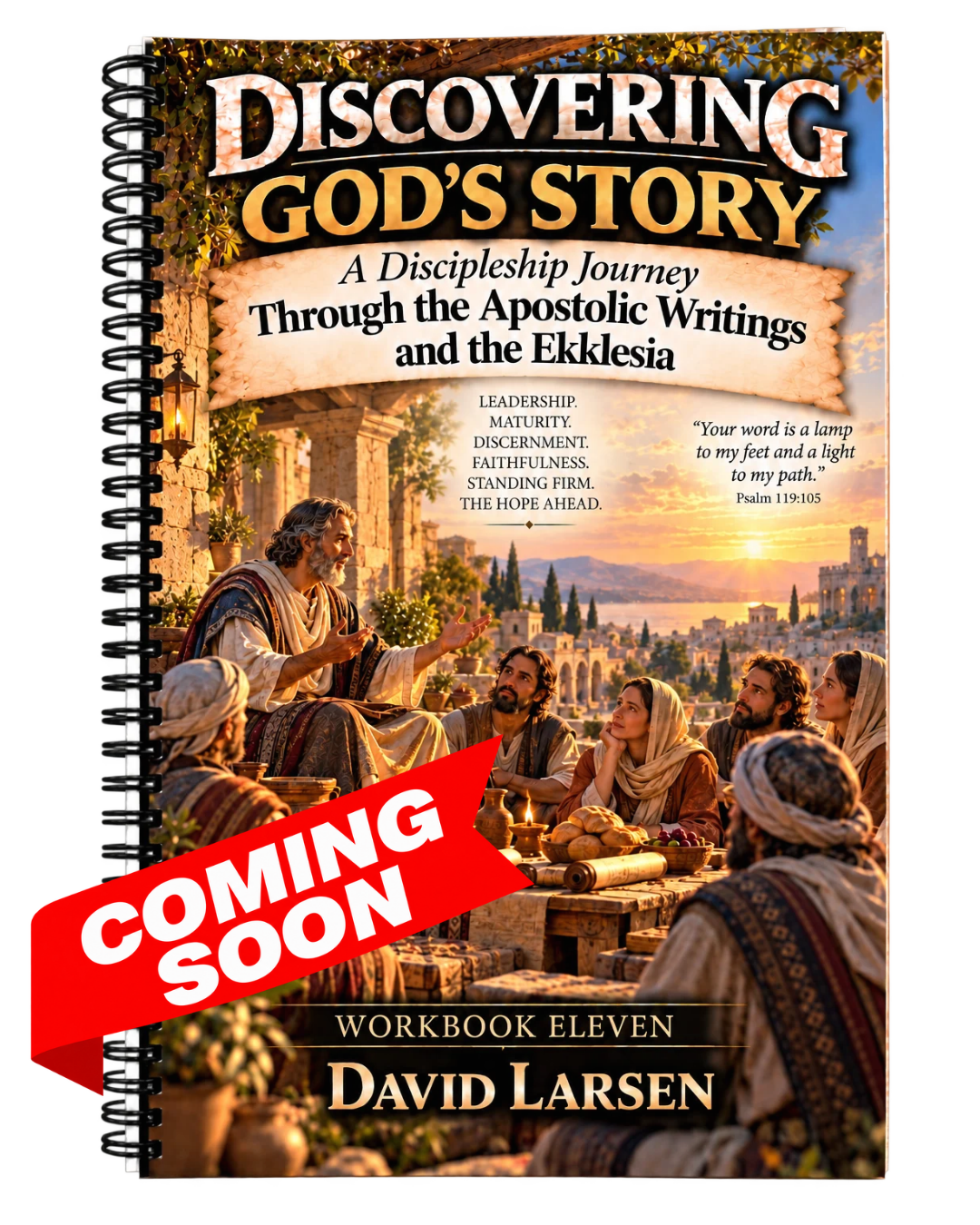
A Discipleship Journey Through the Apostolic Writings and the Ekklesia explores the instruction, encouragement, correction, and warning given to Yahweh’s people as the first generation of disciples learns to mature, endure suffering, resist deception, love one another, and remain faithful while awaiting the return of the King.
These writings do not abandon the story established in the Torah, the Writings, the Prophets, the Gospels, Acts, and Paul’s letters. They continue to draw upon covenant, priesthood, sacrifice, Torah, wisdom, exile, inheritance, holiness, Kingdom, and the promises of Yahweh while showing how those realities are understood through the Messiah.
Hebrews presents Yahshua as the exalted Son, faithful High Priest, and mediator of the New Covenant. Its argument reaches deeply into Israel’s Scriptures, drawing upon the wilderness generation, priesthood, Tabernacle, sacrifice, covenant, and Day of Atonement to reveal the significance of the Messiah’s work.
Yet Hebrews is not merely explaining theology. It is calling a community to perseverance.
The repeated warning is not to drift, harden the heart, turn back, or abandon what has been received. Like Israel in the wilderness, Yahweh’s people must continue forward in faith. The great examples of faith are therefore not presented simply as heroes to admire, but as witnesses encouraging disciples to endure until the promised inheritance is received.
James brings covenant faithfulness into everyday life.
His letter is deeply rooted in the wisdom tradition and the teaching of Yahshua. He confronts divided loyalty, uncontrolled speech, favoritism, selfish ambition, quarrels, misuse of wealth, and a kind of faith that exists only in words.
James insists that hearing the Word must lead to doing the Word. Genuine faith becomes visible through obedience, mercy, endurance, humility, wisdom, prayer, and care for others. The community is called to become a people whose actions correspond with what they profess to believe.
Peter writes to disciples living as strangers and sojourners within a world that does not share their allegiance.
First Peter calls them to holiness, hope, humility, mutual love, and faithfulness through suffering. Their identity as a chosen people and royal priesthood carries both privilege and responsibility. They are to represent Yahweh faithfully among the nations even when obedience brings rejection or persecution.
Suffering is therefore not evidence that Yahweh has abandoned His people. Peter continually points disciples toward the suffering Messiah, whose example teaches them how to remain faithful without retaliation, fear, or compromise.
Second Peter intensifies the call to maturity and vigilance. Believers are urged to grow in faith, virtue, knowledge, self-control, perseverance, godliness, brotherly affection, and love while resisting false teachers who distort truth for their own purposes.
The coming Day of Yahweh remains central to that exhortation. Because the present age will not continue forever, disciples must consider what kind of people they ought to become while waiting for the new heavens and new earth in which righteousness dwells.
John brings the life of the covenant community back to several inseparable realities: truth, love, obedience, fellowship, and confidence before Yahweh.
His writings refuse to separate belief from life. To know Yahweh is to walk in the light. To love Him is to keep His commandments. To claim fellowship with Him while refusing to love one another exposes a contradiction between confession and conduct.
John repeatedly calls the community to discern between truth and deception. Not every spiritual claim is trustworthy. Disciples must test what they hear, remain in what they received from the beginning, confess the Messiah faithfully, and recognize that genuine spiritual life produces righteousness and love.
Love itself becomes one of the clearest evidences that the life of Elohim is present among His people. The command to love one another is not presented as sentimental language but as a defining characteristic of the covenant community formed by Yahshua.
Jude brings the warnings of the Apostolic Writings into sharp focus.
When corrupt influences enter the community and distort grace into permission for ungodliness, Jude calls believers to contend for the faith entrusted to Yahweh’s people. He reaches back into Israel’s Scriptures and earlier examples of rebellion to show that judgment and accountability remain serious realities.
Yet even here, the emphasis is not fear alone. Believers are told to build themselves up in faith, pray in the Holy Spirit, remain in the love of Elohim, show mercy, rescue those being drawn away, and trust the One who is able to keep them from falling.
Across these writings, the ekklesia is never presented simply as a religious institution or a gathering people attend. It is a covenant community being formed into a faithful people under the authority of the risen Messiah.
Every member therefore carries responsibility. Disciples are called to encourage one another, bear with one another, pray for one another, confess, forgive, serve, exercise discernment, resist deception, pursue holiness, care for those who suffer, and help one another endure.
The Apostolic Writings also make clear that beginning the journey is not the same as completing it. Yahweh’s people are repeatedly told to hold fast, remain watchful, grow toward maturity, resist apostasy, endure suffering, and continue faithfully toward the promised inheritance.
The workbook invites readers to examine these writings within the larger biblical story while asking what genuine covenant community should look like when truth, love, holiness, perseverance, discernment, and shared responsibility are actually lived together.
By the end of the Apostolic Writings, the people of Yahweh have been instructed, encouraged, corrected, and warned. They know that the Messiah reigns, that suffering and deception will continue, and that faithfulness must be maintained until He returns.
The final question of the biblical journey now comes into view: How will Yahweh bring His Kingdom purpose to completion?
The Apostolic Writings call Yahweh’s people beyond simply beginning the journey to becoming a mature, holy, loving, discerning, and enduring covenant community prepared to remain faithful until the King returns.
Reviews
There are no reviews yet.