
Description
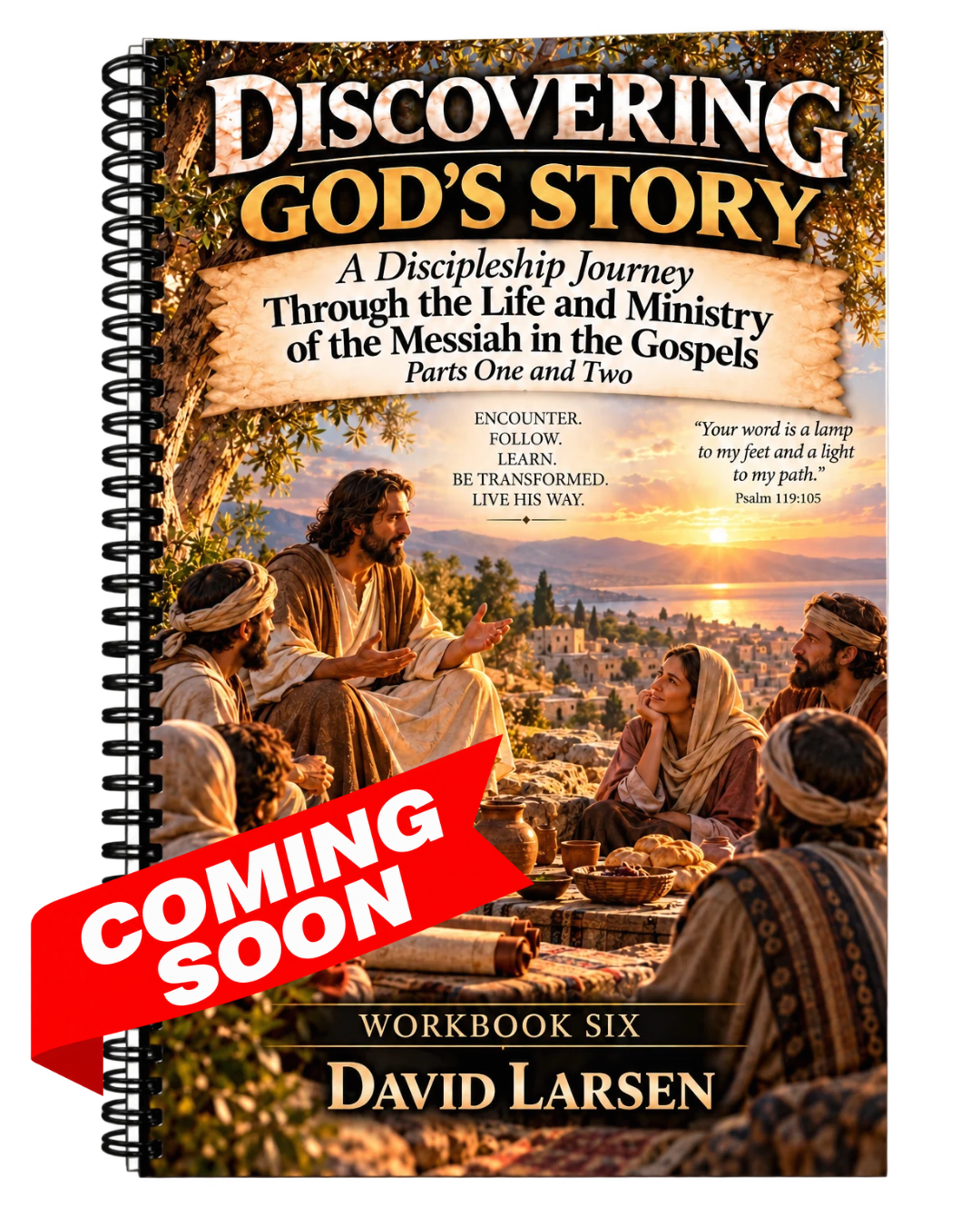
Discovering God’s Story
A Discipleship Journey Through the Life and Ministry of the Messiah in the Gospels
Parts One and Two
The Torah establishes the foundation. The Writings trace Israel’s covenant journey. The Prophets reveal what Yahweh promises to do. With the arrival of Yahshua, those promises, patterns, expectations, and prophecies begin converging in the life of the Messiah.
A Discipleship Journey Through the Life and Ministry of the Messiah in the Gospels, Parts One and Two begins the Gospel journey by asking a central question: Does Yahshua fulfill the profile of the Messiah that the Torah, the Writings, and the Prophets taught Israel to expect?
The journey begins with the circumstances surrounding His birth and the generations of covenant promise that prepared for His arrival. Yahshua enters the story as the Son of Abraham, Son of David, Son of God, promised King, Servant, Shepherd, and Prophet like Moses. The Gospel writers deliberately connect His coming with what Yahweh had already revealed concerning Israel, the Kingdom, covenant restoration, and the hope of Messiah.
John the Baptist prepares the way by calling Israel to repentance and announcing that the Kingdom is drawing near. Yahshua is baptized, the Spirit descends upon Him, and He enters the wilderness, where He confronts temptation and remains faithful where others had failed. From the beginning, His ministry is presented within the patterns and expectations established throughout Israel’s Scriptures.
As Yahshua begins proclaiming the Kingdom of Elohim, He calls disciples to leave their former lives and follow Him. His ministry is not limited to giving people new information. He begins forming men and women who must learn to hear, trust, obey, serve, and participate in the work of the Kingdom.
His signs reveal that the promised restoration is beginning to break into the present. The sick are healed. Unclean spirits are driven out. Sinners are called to repentance. The broken are restored. Those considered unclean are welcomed back into community. Yahshua demonstrates authority over sickness, nature, spiritual powers, sin, and even death.
Yet the signs continually point beyond themselves. They raise the deeper question of identity: Who is this Man, and what do His words and actions reveal about the One Israel has been waiting for?
His teaching also draws repeatedly upon the Torah and the covenant life Yahweh intended for His people. Yahshua speaks about the Kingdom, righteousness, prayer, forgiveness, mercy, faithfulness, Sabbath, purity, love of Elohim, love of neighbor, and the condition of the human heart. He confronts interpretations and traditions that have obscured Yahweh’s intent and calls His hearers back to wholehearted covenant faithfulness.
The Shema remains central. Love for Yahweh cannot be separated from obedience, and love for neighbor cannot be reduced to outward religious activity. The righteousness Yahshua describes reaches beneath visible behavior to motives, desires, loyalties, and the orientation of the heart.
Throughout Parts One and Two, readers are encouraged to compare what Yahshua says and does with what Yahweh had already revealed. The question is not simply whether an individual event resembles an earlier passage. Readers learn to recognize an accumulating Messianic profile formed through promises, covenant patterns, people, offices, institutions, appointed times, geography, prophetic expectations, and direct prophecy.
Abraham, Moses, David, the Temple, priesthood, sacrifice, shepherd imagery, the Son of Man, the Servant, the bridegroom, the Kingdom, and the appointed times all contribute to the expectations surrounding the Messiah. As these connections accumulate, the identity of Yahshua becomes increasingly difficult to consider apart from the larger biblical story.
The response to Him also begins dividing people.
Some hear and follow. Some marvel but remain uncertain. Some are offended. Religious leaders increasingly challenge His authority and question His interpretation of covenant faithfulness. Crowds gather around Him, yet Yahshua repeatedly distinguishes between those who are attracted to what He does and those who are prepared to become genuine disciples.
His parables reveal both the nearness of the Kingdom and the importance of having ears to hear. They expose the heart, reveal different responses to the Word, and require listeners to decide whether they will receive what Yahweh is revealing.
The growing opposition also exposes a deeper conflict beneath the visible events. The Gospel accounts present a world in which spiritual powers are real, deception is active, allegiance matters, and the ministry of Yahshua directly confronts the kingdom of darkness.
Readers are therefore invited to look beyond the surface of each event. What is Yahweh revealing about His Messiah? What does the response of the human heart reveal? Where is spiritual opposition operating? What does genuine faith look like? What kind of people is Yahshua forming around Himself?
These first two parts of the Gospel journey establish the identity, authority, message, and mission of the Messiah while preparing the reader for the increasingly intense conflict that lies ahead.
Yahshua has announced the Kingdom, demonstrated its power, gathered disciples, confronted false understandings, and revealed the heart of covenant faithfulness. But His ministry is moving toward a decisive confrontation, and the question of who He truly is can no longer remain unanswered.
Parts One and Two invite readers to examine the evidence for themselves and discover how the words, works, patterns, promises, and prophecies established throughout the Tanakh begin converging in Yahshua, revealing Him as the promised Messiah and calling us to become His faithful disciples.
Reviews
There are no reviews yet.