
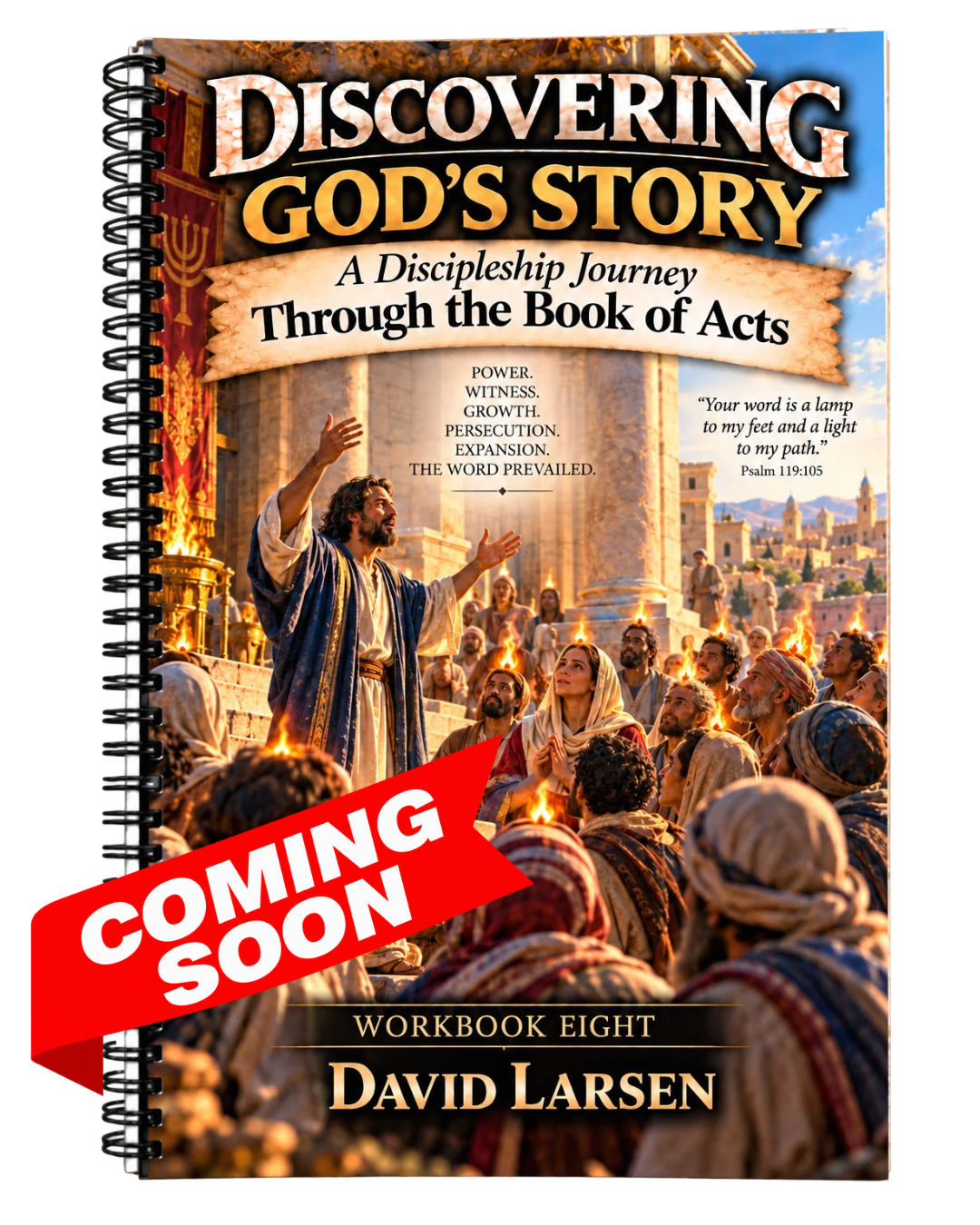
Description
The Gospels end with the risen Messiah commissioning His disciples. Acts begins by showing what happens when that commission is carried forward through the power of the Holy Spirit.
A Discipleship Journey Through the Book of Acts follows the continuing work of Yahshua after His resurrection and ascension as the Gospel moves from Jerusalem into Judea, Samaria, and eventually toward the nations.
Acts begins with the risen Messiah teaching His disciples about the Kingdom of God and instructing them to wait for the promised Holy Spirit. Yahshua then ascends to the Father, where He is exalted and enthroned, while His disciples remain in Jerusalem awaiting the power they will need to become His witnesses.
At Pentecost, the Holy Spirit is poured out, Peter proclaims the risen Messiah, and thousands respond in repentance and baptism. A new covenant community begins taking visible form as disciples devote themselves to the apostles’ teaching, fellowship, breaking of bread, prayer, generosity, worship, and shared life.
The early chapters of Acts reveal both the power and the cost of this new movement. Miracles accompany the proclamation of the Gospel, but opposition grows as well. Peter and John are threatened, Stephen becomes the first martyr, and persecution scatters disciples beyond Jerusalem.
What appears to be an attempt to stop the movement instead becomes part of the means through which it expands.
The Gospel reaches Samaria, an Ethiopian official receives the message, and Saul, the fierce persecutor of the disciples, encounters the risen Messiah and is transformed into one of His most important witnesses.
The story then reaches a major turning point through Peter and Cornelius. Yahweh makes clear that the good news is moving beyond its Jewish beginnings and that Gentiles are being welcomed through faith in the Messiah and the gift of the Holy Spirit. This development raises important questions about covenant identity, fellowship, Torah, circumcision, and what it means for Jews and Gentiles to belong together within the people of God.
The Jerusalem Council becomes a defining moment as the apostles and elders seek to understand how Gentile believers should enter the growing community. Their decision demonstrates the importance of listening to Scripture, recognizing the work of the Spirit, and preserving unity as the Gospel moves across cultural and ethnic boundaries.
From there, Acts increasingly follows Paul and his companions as the mission spreads throughout the Roman world. Cities such as Philippi, Thessalonica, Corinth, and Ephesus become centers where communities of disciples are formed, tested, instructed, and prepared to continue the mission.
Acts does not present the early ekklesia as a flawless community. Disagreements, persecution, cultural tension, false motives, leadership challenges, and difficult decisions appear throughout the story. Yet again and again, the Word continues to spread and the Spirit continues to direct the mission.
One of the great themes of Acts is the growth of the Word. Opposition cannot silence it. Imprisonment cannot contain it. Political power cannot prevent it. Religious resistance cannot stop it. The message of the risen Messiah continues moving forward through ordinary men and women empowered by the Spirit.
The workbook invites readers to examine how the first disciples prayed, witnessed, discerned, handled conflict, responded to persecution, formed communities, recognized leadership, crossed cultural boundaries, and depended upon the Holy Spirit as they carried out the mission entrusted to them.
Acts also provides the historical setting necessary for understanding many of the letters that follow. The churches Paul later writes to are first encountered here as real communities born through mission, opposition, teaching, and the work of the Spirit.
The book reaches its conclusion with Paul in Rome, proclaiming the Kingdom of God and teaching about the Messiah with boldness and without hindrance. Yet the ending is intentionally open. The Word has reached Rome, but the mission has not ended.
The final verses function as both a conclusion and a beginning. The story of Acts closes, but the work of the risen Messiah continues through each generation of disciples who receive the same calling to bear faithful witness.
Acts shows how the risen and enthroned Messiah continues His work through the Holy Spirit, forming a people, advancing the Word, and sending disciples outward to carry the good news of the Kingdom into the world.
Reviews
There are no reviews yet.